
Investment
Financing a Duplex or Triplex: Down Payment and Rental Income Rules
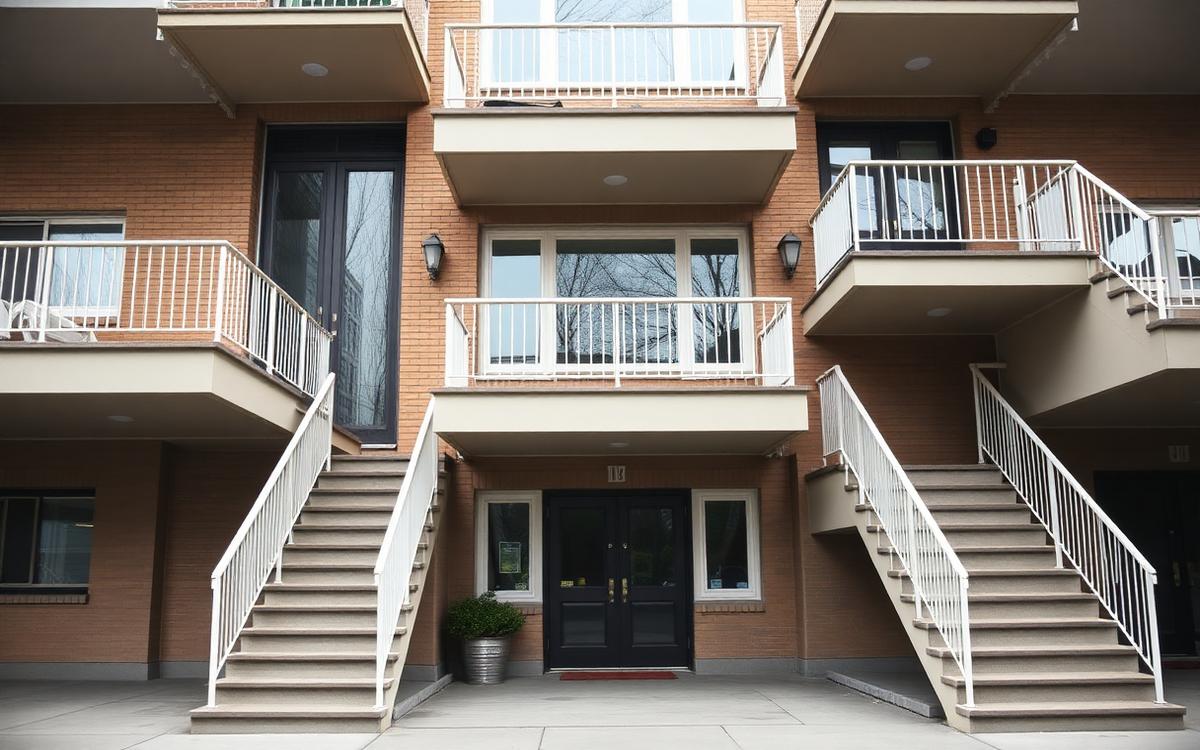
A plex remains one of the best entry points into Quebec real estate: you live in it, and tenants fund part of the mortgage. But down payment and income rules change with the number of units — and with whether you occupy the building.
Required down payment by type of plex
Owner-occupied duplex: 5% down on the first $500,000 and 10% on the excess, within insured mortgage limits.
Owner-occupied triplex or fourplex: 10% down.
Non-owner-occupied building (fully rented, 1 to 4 units): 20% minimum down, with insurance unavailable in most cases.
The insured mortgage cap has been $1.5M of property value since December 2024, which makes many plexes insurable in larger markets.
How rental income is counted
Two main methods coexist. The add-back method adds a portion of the rents — often 50% — to your eligible income.
The rental offset method instead subtracts a portion of rents, frequently 50% to 80%, from the housing expense. It is generally more generous.
Some lenders use a debt service coverage ratio on larger buildings. The chosen method can shift your approval by tens of thousands of dollars: this is where lender selection matters most.
A concrete example
Triplex at $750,000, owner-occupied, two units rented at $1,200 each, for $28,800 of gross annual rent.
10% down: $75,000, base loan $675,000. With the insurance premium applicable at 10% down (3.10%), the loan lands around $695,900.
Using 50% add-back, $14,400 is added to your income. Using 80% offset, $23,040 is instead removed from annual housing expense — a markedly more favourable impact on the ratios.
Documents specific to an income property
Current signed leases, TAL filings where applicable, and a rent roll. Without a lease, many lenders use a market rent set by the appraiser.
Schedule T776 from your returns if you already own properties, plus an income and expense statement for the target building.
A full appraisal is almost always required on a plex, unlike a standard single-family home.
The most common pitfalls
Overestimating rents: the lender uses the lesser of actual and market rent.
Forgetting expenses: taxes, insurance, maintenance, vacancy and management reduce real returns. A prudent rule is to reserve 25% to 35% of gross rents for non-mortgage expenses.
Ignoring occupancy status: moving out after an insured 5% or 10% down financing breaches the loan conditions.
Finally, a non-conforming unit or poorly documented heating-included leases can reduce the income a lender recognizes.
One avenue worth considering: the secondary suite
Since 2025 it is possible in some cases to use an insured refinance to fund adding a secondary suite to an existing property, up to four units and within value limits set by the insurer.
This route creates rental income without buying a second building, by mobilizing equity you already have.
The conditions are specific: occupancy, municipal compliance and the value cap must be validated before planning any work.
Related reading
Frequently asked questions
- What down payment is needed for an owner-occupied duplex?
- 5% on the first $500,000 and 10% on the excess, within insured limits. An owner-occupied triplex or fourplex requires 10%.
- Can I buy a fully rented plex with 10% down?
- No. Without owner occupancy, the minimum down payment is 20%.
- Is rental income counted at 100%?
- Rarely. Depending on the method and lender, generally 50% to 80% of rents are used.
- Do I need prior landlord experience?
- Not for a first owner-occupied plex. For purely rental buildings, some lenders value management experience.